
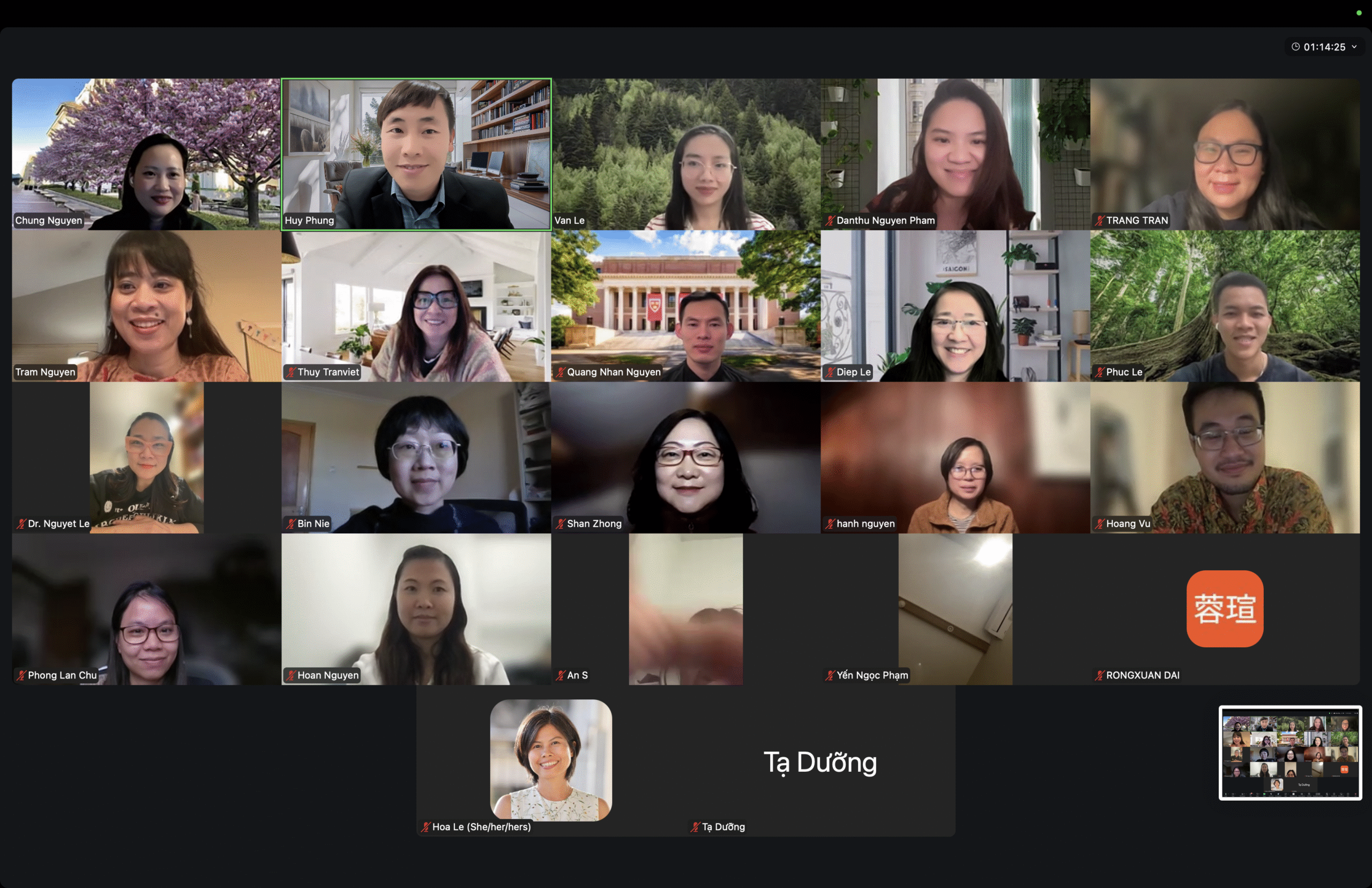
The Group of Universities for the Advancement of Vietnamese in America (GUAVA) recently hosted GUAVA Connect 2025, a workshop that highlighted the intersection of digital technology, heritage preservation, and language education. The event featured a comprehensive presentation by the “Digitizing Vietnam” (Di Sản Số Việt Nam) project team, sparking lively discussions among educators and researchers globally.

Bridging the Gap: The “Digitizing Vietnam” Mission
The session opened with an introduction by Chung Nguyen, welcoming the “Digitizing Vietnam” team. The keynote presentation was led by Tram Nguyen, who outlined the project’s origins—a partnership between Fulbright University Vietnam and Columbia University, established in the summer of 2022 with support from the Henry Luce Foundation.
The project’s mission goes beyond simple storage; it aims to “breathe new life” into archives. By combining preservation with interaction, the project seeks to transform static archives into living resources for teaching and research, facilitating a dialogue between the past and the present.
A Wealth of Digital Collections
Tram Nguyen introduced the project’s 19 collections, which are divided into pre-modern Han-Nom materials and modern Vietnamese studies.
- Key Collections: These include the “Pre-modern Han-Nom Repository” (the largest collection, featuring classics like The Tale of Kieu and works by Ho Xuan Huong), and the “Linguistic and Script Studies” collection featuring the work of Prof. Nguyen Quang Hong.
- Multimedia: Beyond text, the archives include oral histories, sounds of daily life, and photography collections, ensuring a multi-dimensional preservation of culture.
Interactive Education: The “Playground” of Learning
Van Le presented on the application of digital tools in education, describing the project as a “creative playground” rather than just a warehouse. She demonstrated several innovative tools designed to engage students:
- Bói Kiều (Tale of Kieu Divination): An app that allows users to interact with the 3,200 verses of The Tale of Kieu through the traditional custom of divination, making the classic text more personal and accessible.
- Nghe Chuông Nữ Giới (Listening to the Women’s Bell): A tool based on the 1918 newspaper Nữ Giới Chung. It uses AI to answer user queries using the specific voice and ideology of early 20th-century feminist writers.
- Creative AI Tools: These include “Cỗ Máy Phù Phiếm” (The Vanity Machine), which rewrites modern ads in a vintage style , and a poetry generator that creates poems in the style of Ho Xuan Huong.
“We want to turn the archive into a living resource… creating a dialogue between the past and the present.” — Tram Nguyen
Tools for Research: Technical Innovation
Phuc Le detailed the technical tools developed to support researchers, emphasizing open access and user experience.
- Han-Nom Dictionary: A comprehensive digital dictionary integrating five different Han-Nom dictionaries, inherited from the Nom Preservation Foundation.
- Chrome Extension: A browser tool allowing users to look up Han-Nom characters on any website without navigating away.
- OCR & Input Tools: The team is collaborating with the University of Science (VNU-HCM) to develop Optical Character Recognition (OCR) for Han-Nom and an input method that supports typing via Quoc Ngu, handwriting, or radical lookup.
Future Directions and Opportunities
The team outlined a future roadmap heavily integrating Artificial Intelligence. Plans include using AI as a “mentor” to chat with documents and building a network connecting digitized collections from various universities into a single accessible portal.
The event concluded with breakout rooms for deeper collaboration, reaffirming GUAVA’s commitment to connecting the global community of Vietnamese language educators.
If you missed the event, you can watch the recording below:
https://drive.google.com/file/d/1J-E37GVASuLt_iCGcBhVDlM7dNTLDlmc/view?usp=sharing
